Tuesday, Nov 04, 2025
• Thomas Johns :
[email protected]
By Thomas Johns
School of Social Work
Three University of Texas at Arlington researchers have joined forces to create a new community-based initiative that aims to strengthen brain health research, education and outreach in Arlington.
The Arlington Healthy Brain Collaboratory, led by Dr. Noelle Fields from the School of Social Work, Dr. Tracy Greer from Psychology and Dr. Denise Hernandez from Kinesiology and Public Health, was launched through a planning grant from UT Southwestern’s Clinical and Translational Science Award Program.
 “We wanted to build capacity in brain health right here in Arlington,” Fields said. “There are so many resources in Dallas and Fort Worth, but Arlington, even with its size, doesn’t really have a central hub for research, education, and services to support residents and families affected by Alzheimer’s disease and related dementias .”
Dr. Tracy Greer, UTA Professor of Psychology, explained the importance of a multidisciplinary approach to the Collaboratory.
“Multidisciplinary teams allow for a variety of perspectives, connections, and contributions to the Collaboratory, with the shared goal of working together to identify resources and initiatives to support brain health for Arlington and surrounding areas,” Greer said.
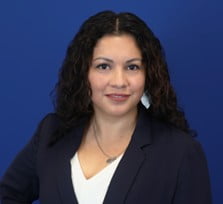
A key component to the Collaboratory is a partnership with the DFW Community Health Workers Association. Dr. Denise Hernandez, UTA Assistant Professor of Kinesiology, has a strong record of successful collaboration with the association. By drawing on the expertise and community connections of Community Health Workers, the Collaboratory is better prepared to identify barriers to brain health in Arlington and to develop targeted education, research, and interventions.
The term “Collaboratory,” a blend of collaboration and laboratory, reflects the project’s dual mission of research and community engagement. The group hopes to create a space that connects researchers, community leaders, residents, students and health professionals to promote brain health and address the growing public health challenge of Alzheimer’s disease and related dementias.
“Twenty-three percent of dementia cases in Texas are right here in Tarrant County,” Fields said. “That’s a lot. We have an opportunity to leverage UTA resources to strengthen Arlington’s capacity for brain health research, education and services.”
The Collaboratory's first goal is to form a community advisory board that includes health professionals, local nonprofit leaders, neuropsychologists, neurologists, persons living with dementia and family caregivers. The board will help identify gaps in brain health education, research and community support across Arlington.
 “Working directly with community members allows us to understand and determine needs, assess and develop resources, and distribute resources to the community so that what we develop is directly responsive to community needs,” Greer said. “All phases of the process, from understanding needs to developing strategies, include active participation of community members. This approach helps build credibility and also ensures that resources developed are aligned with the needs of the community.”
The Collaboratory will also build partnerships with organizations such as Meals on Wheels, local hospitals and faith-based institutions. Fields said those connections will help reach diverse residents and ensure that the group’s work remains culturally responsive.
“Faith-based communities often serve as trusted spaces for health education,” she said. “We want to meet people where they are.”
Membership in the Collaboratory is open to the public and free. Fields said it includes students, faculty, staff, healthcare/social service professionals, and Arlington residents who want to contribute to brain health awareness and education. “We want to include everyone from BSW students to Ph.D. candidates,” she said. “Maybe a student learns about research or finds an internship related to Alzheimer’s or caregiving. The goal is to connect people to brain health.”
While the grant runs through April, Fields said the Collaboratory is designed to continue long after. “Even when the funding ends, the Collaboratory won’t go away,” she said. “We’re already developing a website and planning to host a signature event in the spring.”
The Collaboratory will align its efforts with ongoing UTA initiatives, such as the Arlington Study of Healthy Aging and the Center for Healthy Living and Longevity. “Social work has a real anchor here,” Fields said. “Our focus on community-based work related to brain health complements what’s happening in other departments on campus.”
She added that the timing of the project could not be better. “On the November ballot, there’s a proposal to establish a Texas Dementia Research Institute with billions of dollars in funding,” Fields said. “That could be a huge resource and opportunity for UTA to partner on large community-based projects focused on serving Arlington. The timing is perfect.”
For Fields, the Collaboratory is about more than research. It’s about transforming how people think about aging and brain health. “We all age,” she said. “Brain health isn’t just about older adults. It’s across the lifespan. Even things like high blood pressure and exercise can impact brain health later in life.”
Ultimately, the Healthy Brain Collaboratory aims to position Arlington and UTA as leaders in brain health engagement. “We’re building something sustainable,” Fields said. “It’s exciting to think that years from now, this Collaboratory could serve as the foundation for research, education and community impact across North Texas.”